
Resources
Understand the shift.
Build with conviction.
Frameworks for evaluating AI labor, organizing a hybrid workforce, and thinking about the institutions of an agentic economy.
Ideas into practice
A vocabulary for
what comes next.
The useful questions go beyond whether a model can answer. Can a worker own a responsibility? Can an organization govern it? Can the resulting capacity create sustained value?
01 / The workerWhat makes an autonomous worker?
A useful starting point is continuing responsibility. A worker has an objective that survives a single interaction. It recognizes changes relevant to that objective, generates the work required, and coordinates its actions with the people and systems around it.
That requires an identity, operating context, memory, authority, and accountability. Identity establishes who is acting. Context and memory connect the present task to prior work. Authority defines what can be done independently and what must reach another owner. Verification establishes whether the intended outcome was achieved.
Learning adds another dimension: experience can change the worker's future method. A recurring exception may reveal a new pattern. The candidate explanation needs testing, including cases where it should fail. A validated strategy can then be reused under the right conditions. Remembering an event and improving an operating method are related, but distinct, capabilities.
Explore the agent architecture02 / The economicsEvaluate the work, then the economics.
Begin with a responsibility and an observable outcome. Establish the scope of the work, the evidence of successful completion, and the constraints that must hold. A fast answer is useful only if it advances the actual operational objective.
Then examine the complete delivery process: execution, model and tool use, review, exceptions, retries, and verification. An apparently inexpensive step can create expensive rework downstream. A more capable approach may be appropriate for an unfamiliar or consequential task; a validated method may allow a familiar case to use fewer resources.
Agent Runtime Hours provide a commercial unit for consumed AI labor. They should be evaluated alongside completed work, quality, cycle time, and the organization's total delivery cost. An agent-hour is not a fixed equivalent of a human-hour, and a reduction in model cost alone is not a complete return-on-investment calculation.
Explore the product economics03 / The organizationA hybrid workforce needs a shared operating model.
Adding agents creates organizational questions. Who owns an obligation? Who can approve a decision? Which policy applies? Where should an exception go? Those questions already exist for people; an agent workforce makes them more explicit.
A shared registry connects people and agents to roles, objectives, capabilities, reporting relationships, and authority. Process design coordinates work across those identities and the systems they use. Governance connects policies, OKRs, and capability gaps to the same operating structure.
The allocation of work can evolve. A task may initially require a human specialist. A validated agent capability may later perform part or all of it under a defined mandate. The organizational record and process should reflect that change, while preserving the evidence and ownership needed to understand the result.
Explore Wand OS04 / The economySovereignty is a question of control and continuity.
A national AI labor program combines technical capacity with institutional design. Compute and models support execution. Persistent workers and the hybrid operating system turn that intelligence into governed work. Institutions define the conditions under which identities, credentials, responsibilities, and economic participation can be recognized.
Sovereignty asks whether essential work can continue under national control. That involves critical identities, policies, knowledge, authority, data boundaries, and the ability to replace or sustain important infrastructure. It can include international technology providers within a design that preserves meaningful control.
Domestic capacity is one outcome. The longer-term opportunity also includes delivering governed expertise across organizations and borders. Registration, certification, contracting, accountability, and economic rails need to develop together. Those institutional possibilities are a program of work, not an automatic consequence of deploying a model.
Explore Wand Nations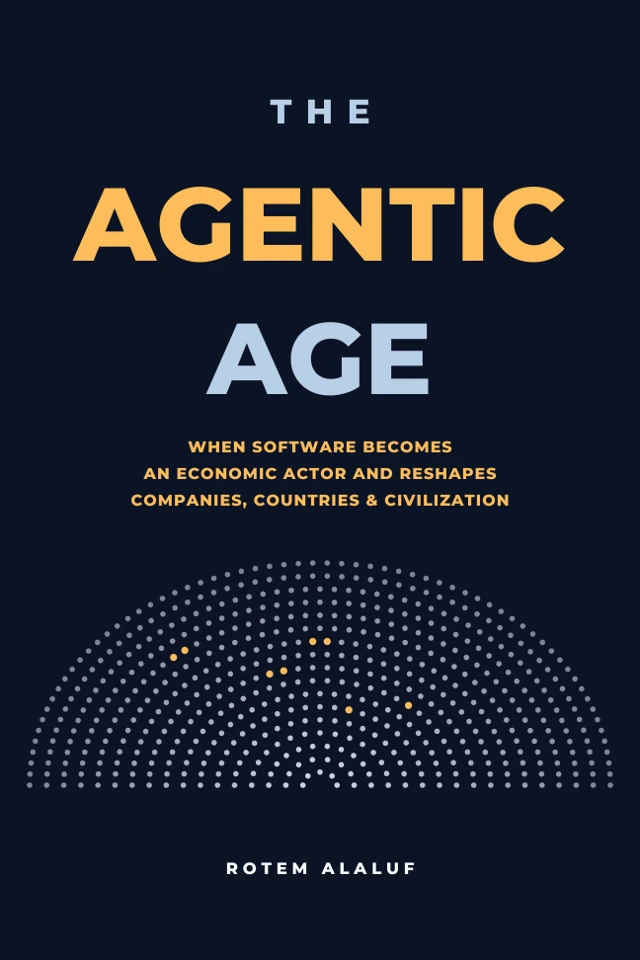
Further reading / A book by Rotem Alaluf
The Agentic Age
Wand's founder explores what changes when software becomes an economic actor—and how that transformation reaches companies, countries, and civilization.
Explore the book on the author's websiteAbout Wand
Building the workers.
And the infrastructure.
Wand AI develops autonomous AI workers and the operating infrastructure for the agentic economy. Its work connects the technical architecture of persistent agents with the organizational and national systems through which AI labor can operate.
Two technologies. One ambition.
Wand Agents bring identity, initiative, memory, learning, and authority to continuing work. Wand OS gives humans and agents a shared registry, processes, and governance. Together, they support a new operating model for enterprises and a foundation for sovereign AI labor programs.
A company built around the shift.
Founded in 2023, Wand brings together research, engineering, enterprise operations, and national infrastructure. Wand’s research portfolio includes more than 40 patents and patent applications across its foundational technologies.
Start with the work
you want to make possible.
Explore the product, or talk with Wand about your organization and its ambitions.